
Connecting with Ivy
weaving wild vines

Hello my friend, welcome to this month’s Wild Revival paid subscriber post. These posts are my deeper dives into seasonal plants and noticing Nature, and this month includes a how-to guide to crafting an Ivy Moon decoration. As a paid subscriber you get content that the public doesn’t, each month to your inbox. If you’d like to catch up over the holidays, click through to open Substack in the app or a browser, click on the ‘archive’ tab and see all my previous posts and pdf downloads.
Winter Solstice 2025 - this post has been made FREE for a month! Enjoy!
Warm winter greetings wild ones! How are you all faring through this Cold Full Moon and December? Last week I shared with the free December Newsletter a little about Ivy - and this is where I’m really letting loose, sending out my word-vines and covering the page like Ivy covers a wall! Grab a cuppa and lets learn about this magical plant, and then onto some crafting. This post is a long one, and may not fit into your email - if you are reading there, jut click through when prompted, to read the rest of the article in a browser window.
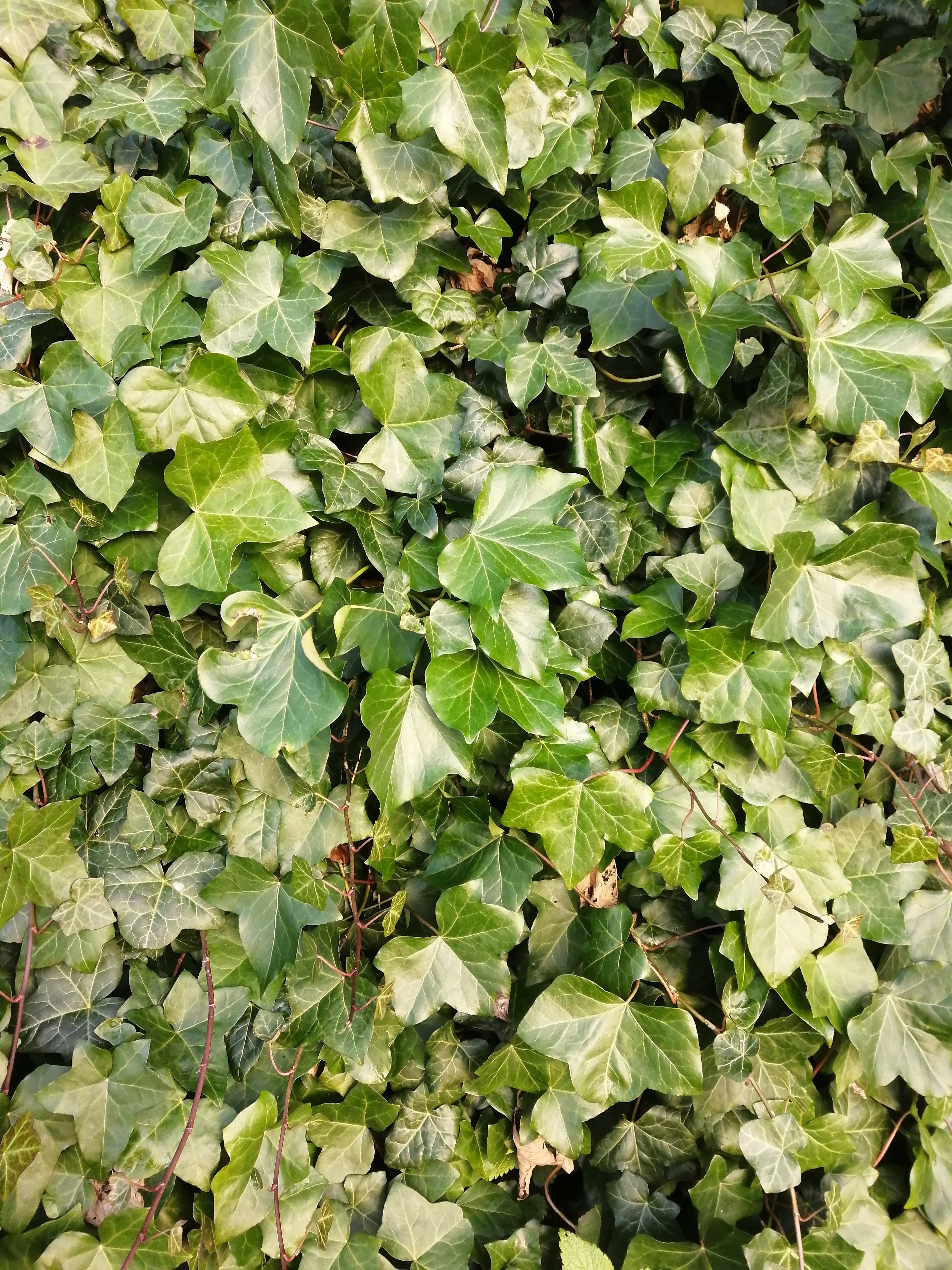
Ivy - Hedera helix
One of my favourite all-time Latin plant names to say aloud, Hedera helix - a spell if ever I heard one, something straight from Harry Potter or Macbeth, it engages my mouth in a way that feels enlivening, try saying it out loud! Ivy is an often-overlooked, ignored, misunderstood and dismissed plant. Swathes of the dark green glossy leaves can carpet woodlands, banks and walls (of which we have plenty here in the historic walled town of Berwick), preferring shadier spots though they will grow almost anywhere. Long vines and tendrils drape themselves over rock faces and stone walls, hit the ground running and continue horizontally on their journey, they will twine around each other and branches, climb upright surfaces adhering to sheer rock, brick or tree bark, spiral around trunks; the helix part of Ivy’s name (ancient Greek for spiral) really describing this twisting, forward-motion continuous growth. This plant seems an unstoppable force, and yet it really lives in the background. Always growing and spreading and yet so slowly that we usually don’t notice it, refusing to conform, crossing the boundaries of plant groups (Ivy could be considered a ground-cover plant when it grows as such, an epiphyte when it climbs trees and crosses between the woodland’s structural layers, or a bush when it ceases to climb or ramble and instead grows upright to flower and fruit) and surprising us at every turn.

And this is where I feel drawn to Ivy at this time of year; when most of our native wild plants have succumbed to the natural seasonal rhythm of dying back, decaying and returning to the Earth, the Ivy underneath is revealed and shows us that not all is asleep. I find comfort in this notion that plants like Ivy are holding the space for us through the Winter months, pulling a blanket over the soil to keep it warm, flowering to feed the insects, scenting sunny mornings with heady pollen, and greening our grey structures, softening the harsh edges.
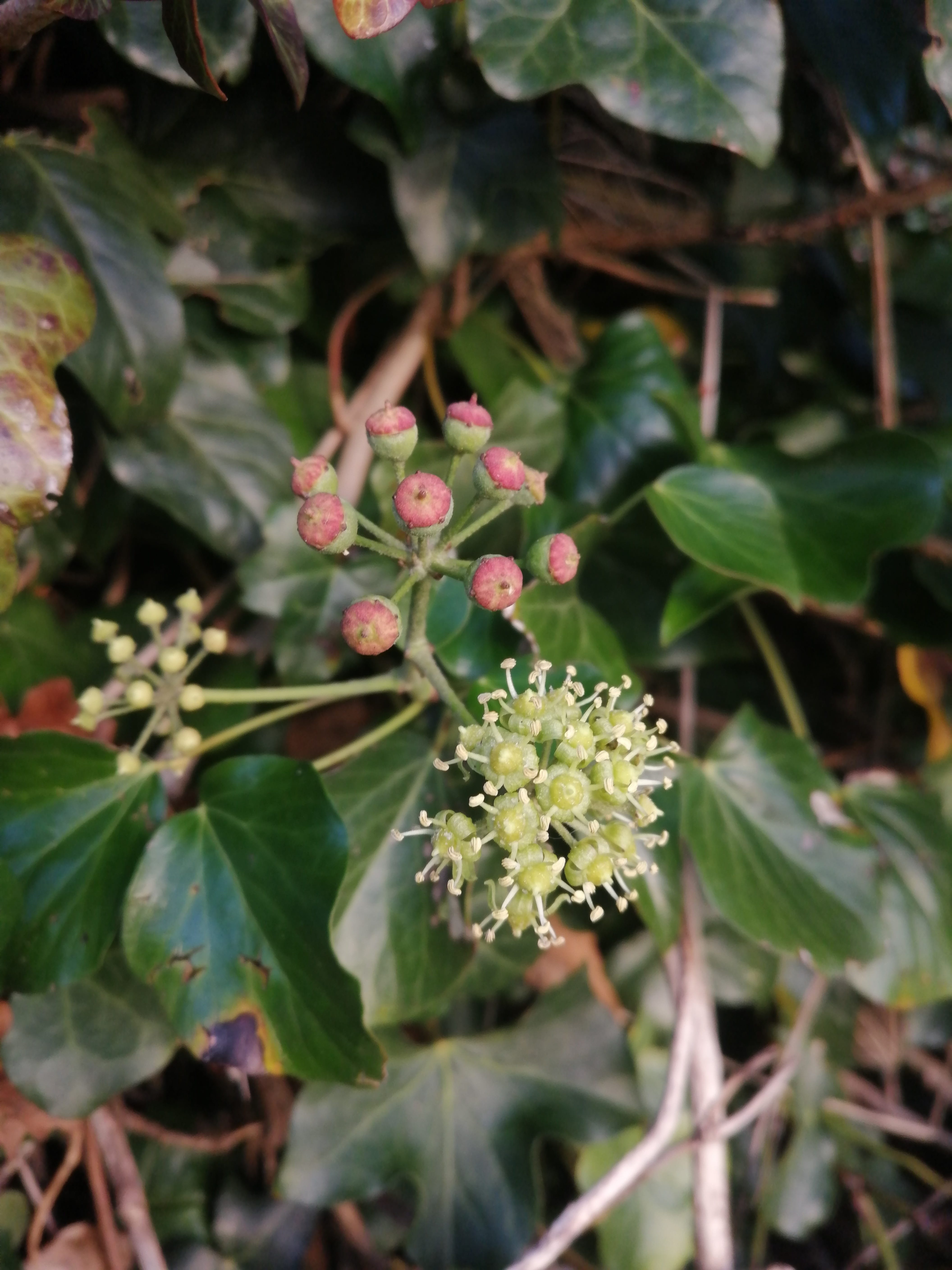
Ivy flowers at this time of year and I find them fascinatingly beautiful, not looking like true (expected) flowers, but like little sculptural structures. Clusters of flowers form sphere-shaped sceptres, each little flower starting as a round yellow-green bud, opening to a tiny star to release pollen, then swelling to a peaked berry the shape of little mitered hats, moving through yellow, green and darkening to near-black when ripe. When flowering at this time of year, you can sometimes see each stage of the flowers and berries on the same plant, casting your gaze over the bush and finding the globes of buds, then the open flowers, the unripe berries, and the larger swollen black berries. You’ll notice that the ground-creeping part of Ivy isn’t flowering, these vines are busy spreading and creating leaves to feed the plant, but on mature plants at some high point on a tree or wall where the plant gets enough sunlight, it will create new branches. These branches are shorter, thicker, and the leaves are a slightly different shape, losing their defined points and being paler green in colour- the flowers appear on this part of the plant. These flowers are such an important source of nectar for our native pollinators in these cold months, and if you pass some flowering Ivy on a sunny day you will see it crawling with bees, hoverflies, flies and beetles. The berries when ripe are favoured by birds, especially blackbirds, and also grow so abundantly on a large plant that we can pick them to add to our door wreaths and table decorations for the festive period.

Ivy’s uses
Ivy’s herbal uses have fallen out of fashion in modern times, but in the past the leaves were used to make teas and concoctions to treat sore throats, coughs and bronchitis, the constituents of the plant being expectorant, which means to help loosen mucus and phlegm, supporting the respiratory system. Ivy is often assumed to be toxic, perhaps a misconception born from confusing it with the North American native plant Poison Ivy, which is actually not related to English Common Ivy at all. The leaves were also used traditionally as a soap, being full of saponins which break down in water with the application of heat or from crushing them in your hands. A saucepanful of the leaves heated in water will draw the saponins out and create a natural detergent suitable for cleaning floors, clothes and other things - something fun to try if you’re camping?
Ivy has a fantastically obvious use too that has become obsolete to all but the few incredibly niche basket-weavers that use wild materials, like me! I may be a little obsessed with weaving Ivy into baskets, and perhaps this stems (sorry) from always wanting to be different and not conform, but it also satisfies my craving to use what I have growing near me, create thriftily, and engage with my local landscape, and as I have plenty of Ivy on my doorstep, it makes sense to me to use it. Willow has long been the go-to material for basketmaking in the UK, other countries and cultures having their preferred weaving plants like ‘Flax’ (Phormium) in New Zealand or the Black Ash bark baskets woven by native American tribes. Willow grows very well in wet conditions and suits the British climate, particularly in areas like Somerset or East Anglia, and has been used by our culture for thousands of years as building and basketry materials. In the Industrial Revolution the demand for Willow led to over 3,000 acres of willow plantation and nowadays when we say basket weaving, it is synonymous with the plant. The first basket I wove at a workshop was made of farmed willow, but since then I have only ever used wild foraged materials as I feel much more connected to the process and the land when I do. Ivy vines are so naturally bendy, flexible, strong and beautiful, and ideal for crafting baskets, crowns, wreaths and other things, and after weaving, the vines dry out and harden, creating strong structures. I love having this connection to Ivy, a plant that grows so wildly and abundantly with absolutely no need for farming or intervention.
Ivy’s Folklore
In Ancient Rome, Ivy was associated with Bacchus, the god of wine, agriculture and fertility, and in Ancient Greece with Dionysus, god of wine, festivity and ecstasy. Both deities in these cultures were depicted with wreaths of Ivy and grape vines about their heads and bodies, and Ivy was believed to have properties of diffusing the negative affects of alcohol on the body. To wear an Ivy crown when drinking was said to cool and temper extravagant behaviours, cure a hangover and protect the wearer from harm.

Ivy also has symbolism in many cultures for long life, immortality and fertility due to it’s evergreen and fast-growing nature. Brides would carry Ivy in their bouquets to assure fidelity and fertility in their marriage, and the pagans at Midwinter would use Ivy to decorate and adorn their homes, the Ivy offering them protection for the Winter and the symbol of rejuvenation and rebirth for the coming Spring. We still practice today making door wreaths from Ivy, Holly, Pine and other evergreens, and these plants do carry with them energetic properties of life in a season of dormancy, a touchstone in a difficult season. I love to be around evergreens at this time of year, stopping to marvel at a Holly bush covered in red berries, or to breathe in the scent of flowering Ivy, or touch my hands to the trunk of Pine trees to feel grounded when my mind is spinning.
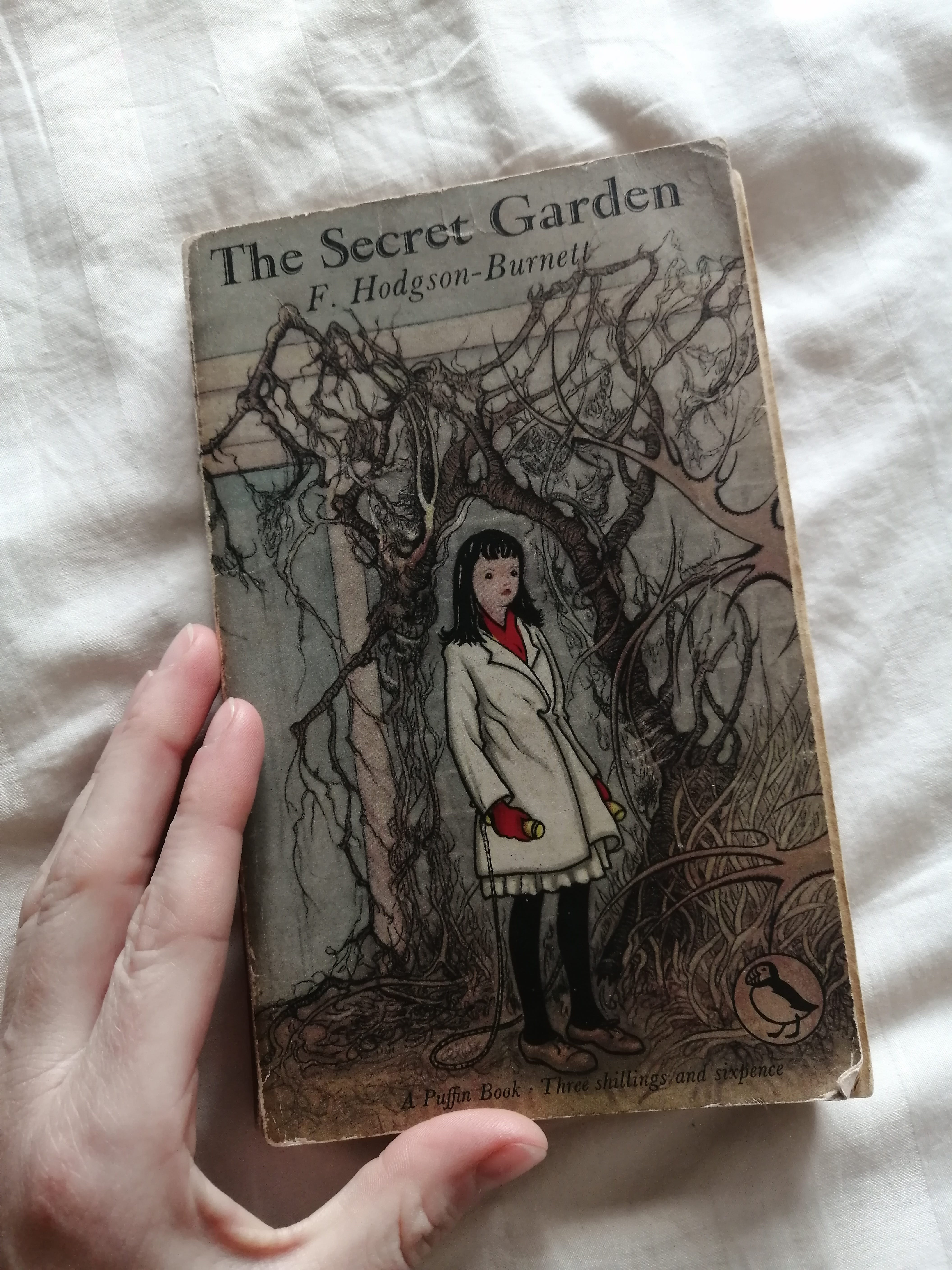
The last story of Ivy that I’d like to share with you is my personal affection for the story of The Secret Garden by Frances Hodgson Burnett, which describes the grounds and gardens of an old British estate in winter, where a girl is exploring and, with the help of a robin, finds a wall covered in Ivy with a mysterious door hidden behind it. Here is one of my favourite extracts of the book:
…there, lo and behold, was the robin swaying on a long branch of ivy. He had followed her and he greeted her with a chirp. As Mary had skipped toward him she felt something heavy in her pocket strike against her at each jump, and when she saw the robin she laughed again. "You showed me where the key was yesterday," she said. "You ought to show me the door today; but I don't believe you know!"
The robin flew from his swinging spray of ivy on to the top of the wall and he opened his beak and sang a loud, lovely trill, merely to show off. Nothing in the world is quite as adorably lovely as a robin when he shows off—and they are nearly always doing it. Mary Lennox had heard a great deal about Magic in her Ayah's stories, and she always said that what happened almost at that moment was Magic.
One of the nice little gusts of wind rushed down the walk, and it was a stronger one than the rest. It was strong enough to wave the branches of the trees, and it was more than strong enough to sway the trailing sprays of untrimmed ivy hanging from the wall. Mary had stepped close to the robin, and suddenly the gust of wind swung aside some loose ivy trails, and more suddenly still she jumped toward it and caught it in her hand. This she did because she had seen something under it—a round knob which had been covered by the leaves hanging over it. It was the knob of a door.
She put her hands under the leaves and began to pull and push them aside. Thick as the ivy hung, it nearly all was a loose and swinging curtain, though some had crept over wood and iron. Mary's heart began to thump and her hands to shake a little in her delight and excitement. The robin kept singing and twittering away and tilting his head on one side, as if he were as excited as she was.
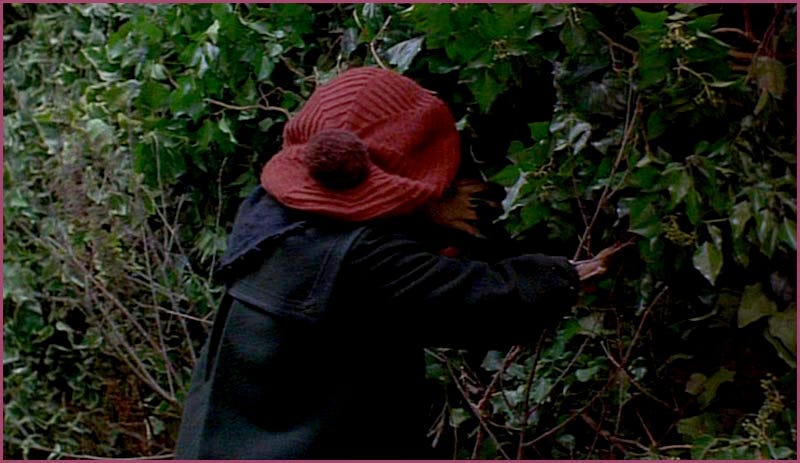
The Ivy in the story is a strong symbol of time passing, of things lying hidden, forgotten, and concealed. There are secrets for many of the characters in the book, things to be revealed in time by Mary’s curious nature, and like the clinging, creeping Ivy, the characters become entangled together and form a bond through the Garden. The Ivy here also represents safety, the flipside of being hidden or concealed. In a world that she finds so isolating and difficult, Mary finds safety behind the curtain of green vines, and making dens outside is something that many of us loved to do as children.
Weaving with Ivy
How to create ‘random-weave’ decorations from natural materials
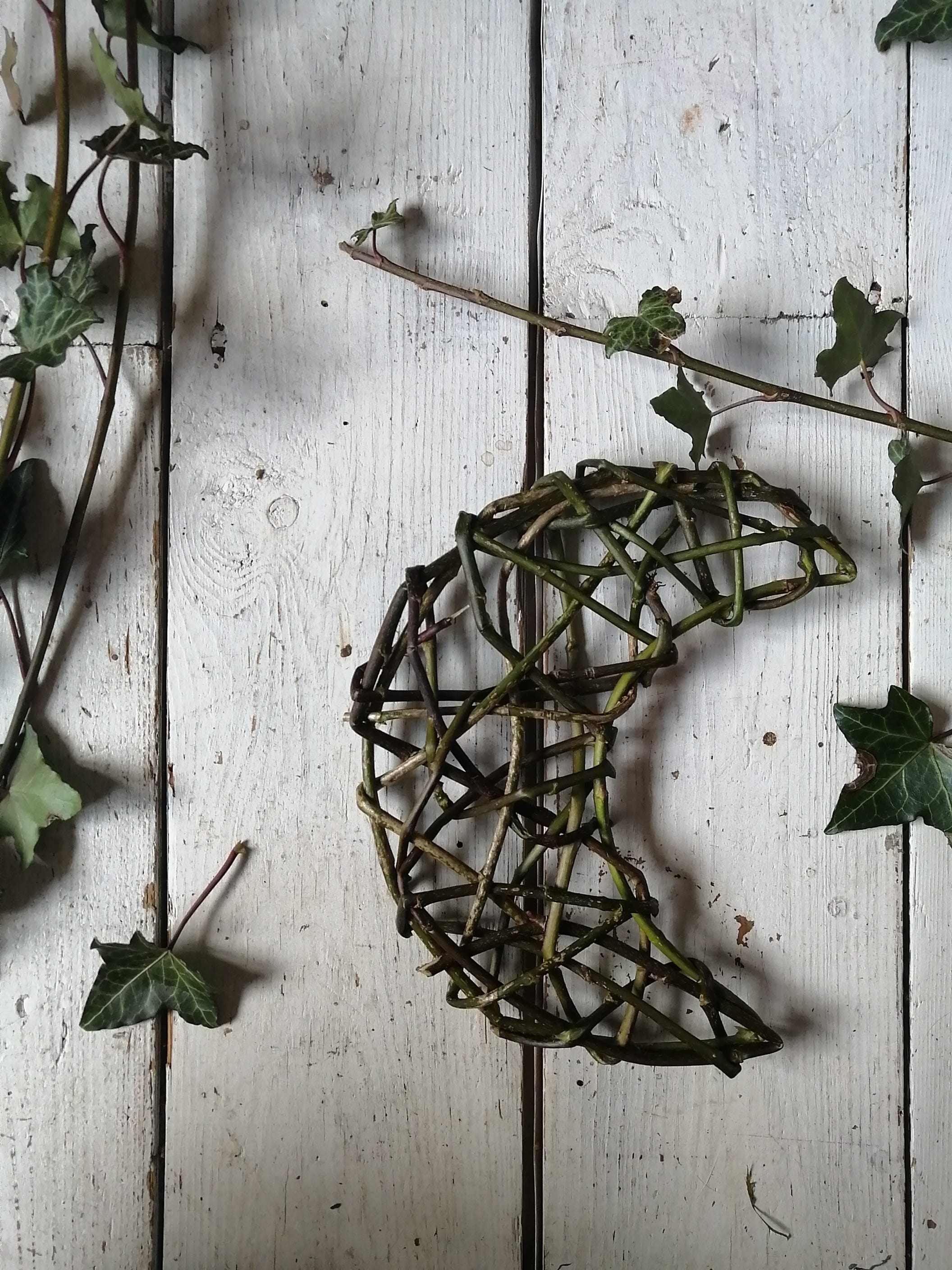
Here is this month’s guide! How to make Winter/Yule/Christmas decorations from Ivy. in the following photos I’ll show you the process by making a crescent-moon-shaped decoration, but you can make any shape you like. Here are some suggestions but you can use your imagination: stars, small triangles to hang up like bunting, chunky capital letters to spell out ‘NOEL’ or someone’s name, or simple Christmas-tree tringle shapes.
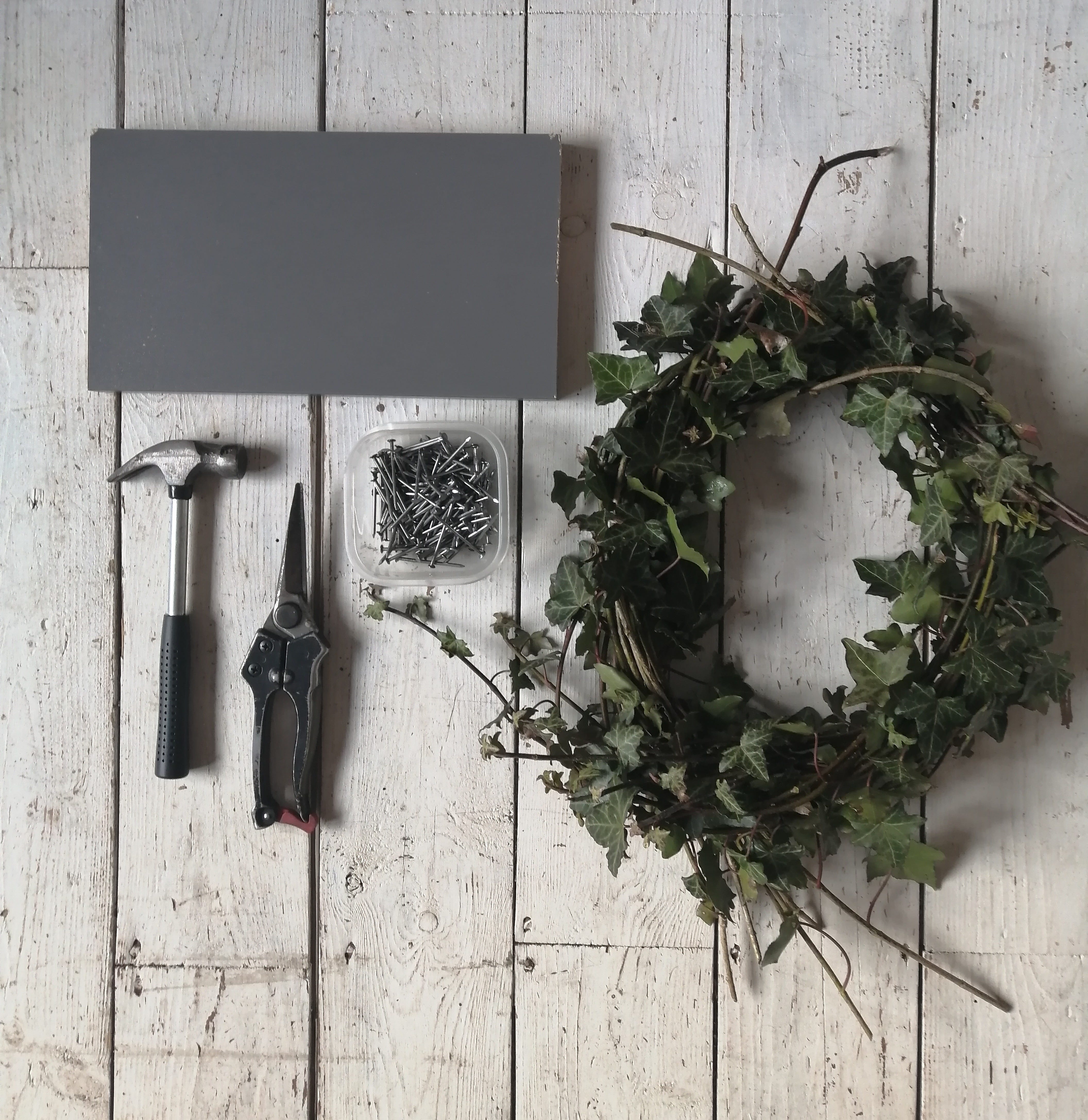
First gather together your tools: a sturdy wooden board large enough to draw your design into (I raided a skip for someone’s discarded cupboard, and my partner helped me cut it into pieces), a hammer and nails at least 3cms/1 inch long, a pencil or chalk, some secateurs or craft scissors.


Now go out and pick your Ivy, looking for walls and buildings, slopes or path edges where the vines trail or hang down from a height. This will mean you’ll find nice long, pliable vines; if you peel them from the ground or where they grow up a tree or surface, you’ll find the branches are more brittle and covered in little roots. Choose the longest, smoothest vines you can find. You’ll need about 6-8 vines for this moon shape that’s 15cms in height, more for larger shapes.


Set up your weaving board by drawing your shape onto the scrap wood with pencil or chalk - draw round a template if you don’t feel confident, I used a saucepan lid to draw the curved edges of my moon. Begin to hammer nails into the board along your guide lines. the nails need to be spaced about 5cms/2 inches apart, and go into the board about 1cm depth, just until they are firmly anchored. If there are any corners or points on your shape, make sure a nail is at the angle. Safety first - Protect your knees if situated on the floor, use the hammer safely, away from others and being aware of your fingers, and place your board on a flat surface perhaps padded with an old blanket.


Begin with your thickest Ivy vines, moving onto the thinner vines later. Strip your first vine of leaves by grasping the tip (the end with the smallest leaves) and pulling it through the thumb and forefinger of your other hand, allowing all the leaves to snap off. Take your vine and weave it in and out of a few nails so that your shape is outlined, making sure to bend a nice firm kink at any corners, and using more than one vine if you need to.


Take your next Ivy stem and tuck the end under one edge. Bring the long end across your shape in any direction, then under the far edge. Repeat this process to zig-zag across the space, each time you hit the outline edge, pass the vine under the edge. When you get to the end, tuck it in somewhere and repeat with more vines, starting anywhere on the shape and randomly weaving in and out, over and under, filling in the gaps and always wrapping under the outline edge when you hit it, creating stability for the weaving.


Continue weaving until you’ve filled in the gaps enough, you’re happy with the look of it and the shape feels stable.


Remove your woven shape from the board in one of two ways: either carefully tease the structure over each nail head to slowly remove the shape, or if you struggle to do this without damaging your decoration, use the hammer to pull out the nails. With secateurs you can trim off any long tails, if they can’t be tucked inside.
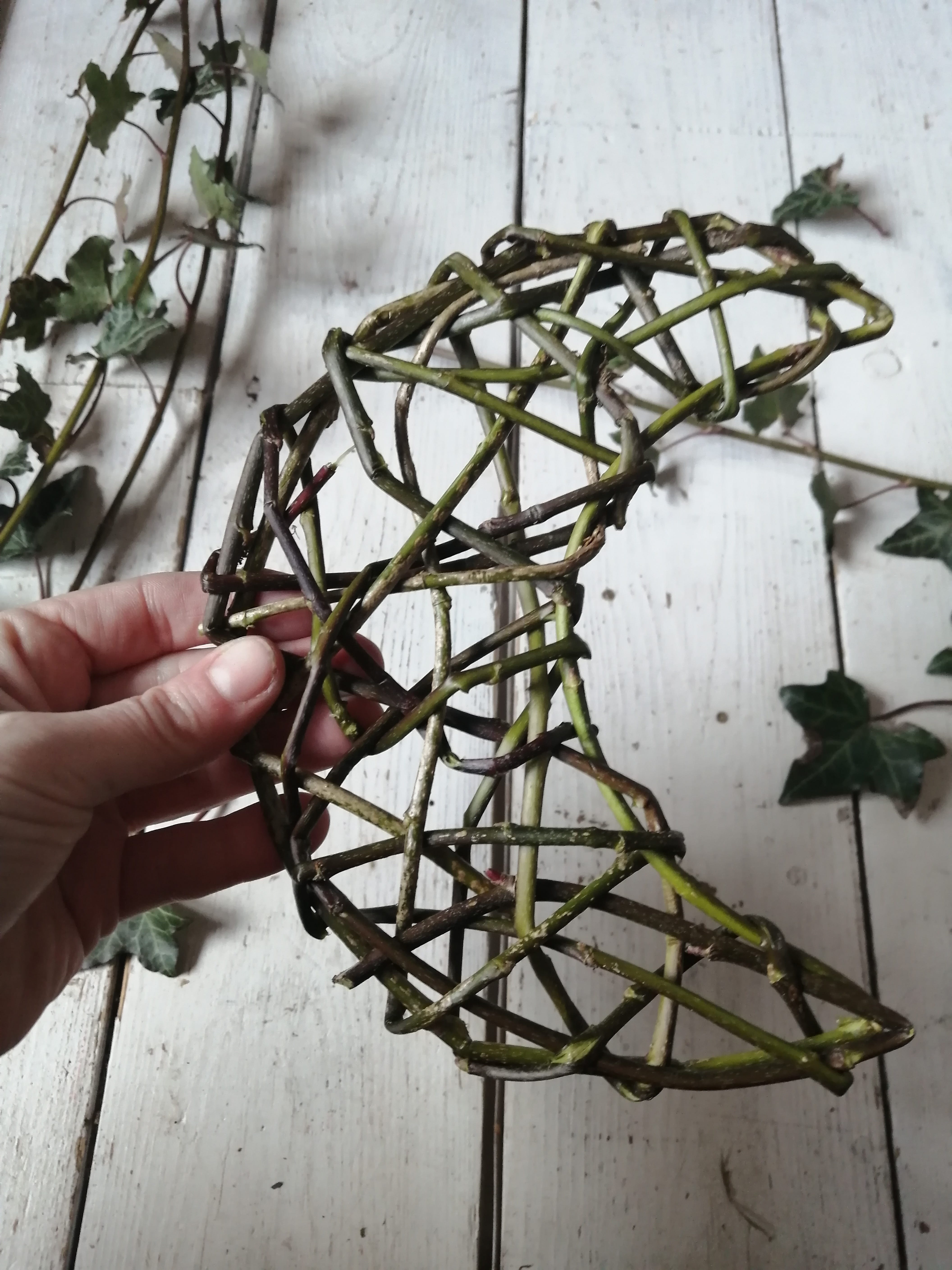
You’ve finished your random-weave Ivy decoration! Hang up with a ribbon or string, attach to your door wreath, balance on your mantle-piece or altar, or gift to a friend. You could even hang them in the garden!
Please do share your photos if you make one, in the Substack threads (link below), or on social media tagging Wild Revival!

Thankyou so much for being here with me! I am so grateful for your company, and I love to write these guides for you. Please do reply or leave a comment, ask any questions you have and make any requests for next month’s mail, the conversation is open and I appreciate the feedback! Happy festive season whatever you are doing, and see you all again in January.
Wild wishes, Jo xxx